
Canadian Investor Protection Fund
News & Publications
Learn About Our $1 Million Coverage Protection
Even if your account is larger than $1 million, it may still be fully protected. Here’s how.
1. Clients’ Priority in a Firm Bankruptcy
When a member becomes bankrupt and the courts appoints a trustee at the request of CIPF, the firm’s assets are allocated to the trustee, and the following steps occur:
- If there are assets in the estate, all client cash and securities (excluding securities registered in a customer’s name) are pooled together into a single customer pool.
- Customer pool will also include cash, inventory and investments of the member firm in its subsidiaries.
- Clients have priority over the general unsecured creditors in relation to the customer pool.
- Each client receives a proportionate share of what is available in the customer pool.
- Any shortfall – which is the difference between the assets in the customer pool compared with the amount owed to clients – is allocated proportionately among all clients.
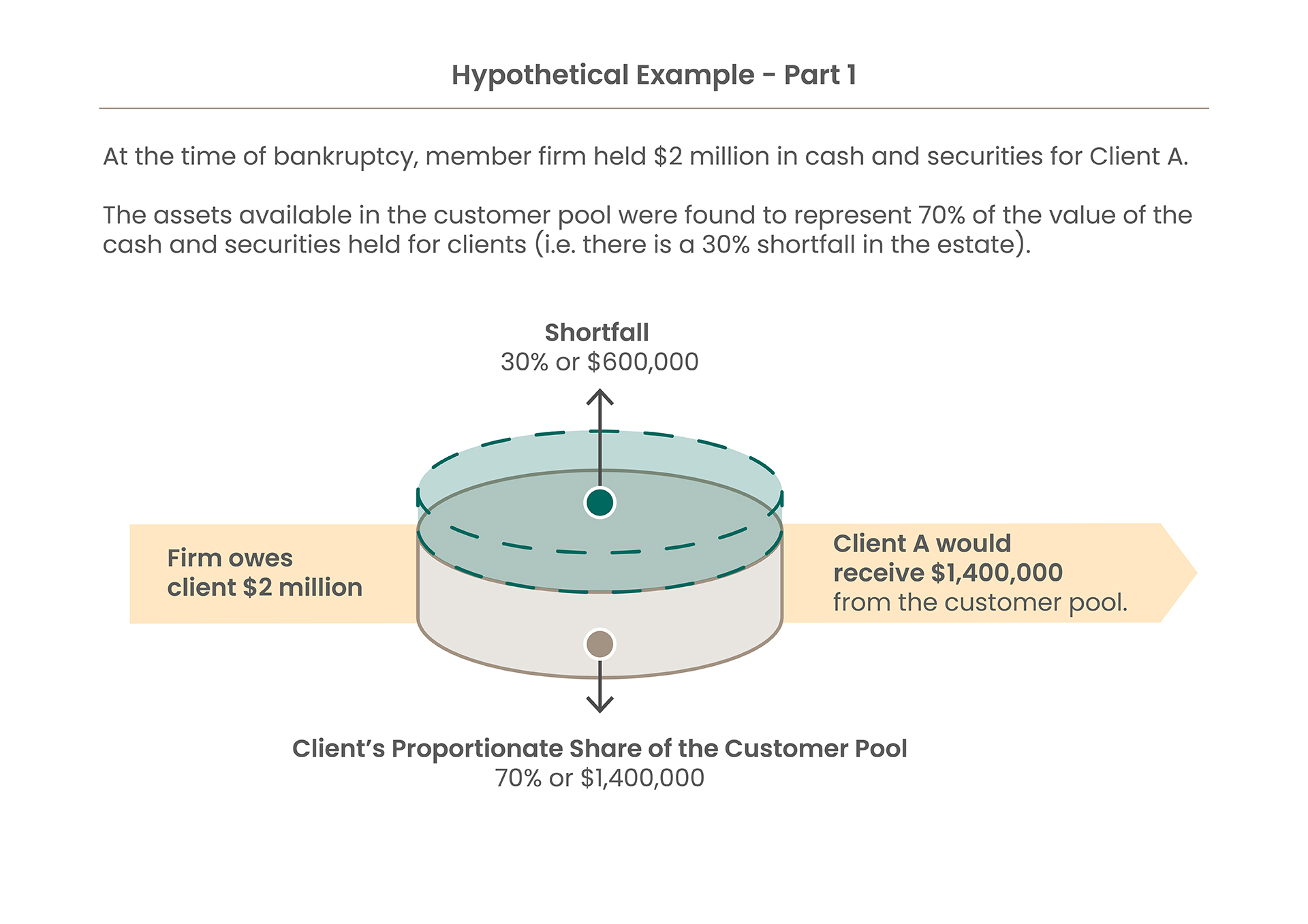
2. How CIPF Protection Applies
CIPF covers missing property - assets that are not returned after a member firm becomes insolvent. To be eligible for CIPF coverage, the client must meet 3 criteria of eligibility:
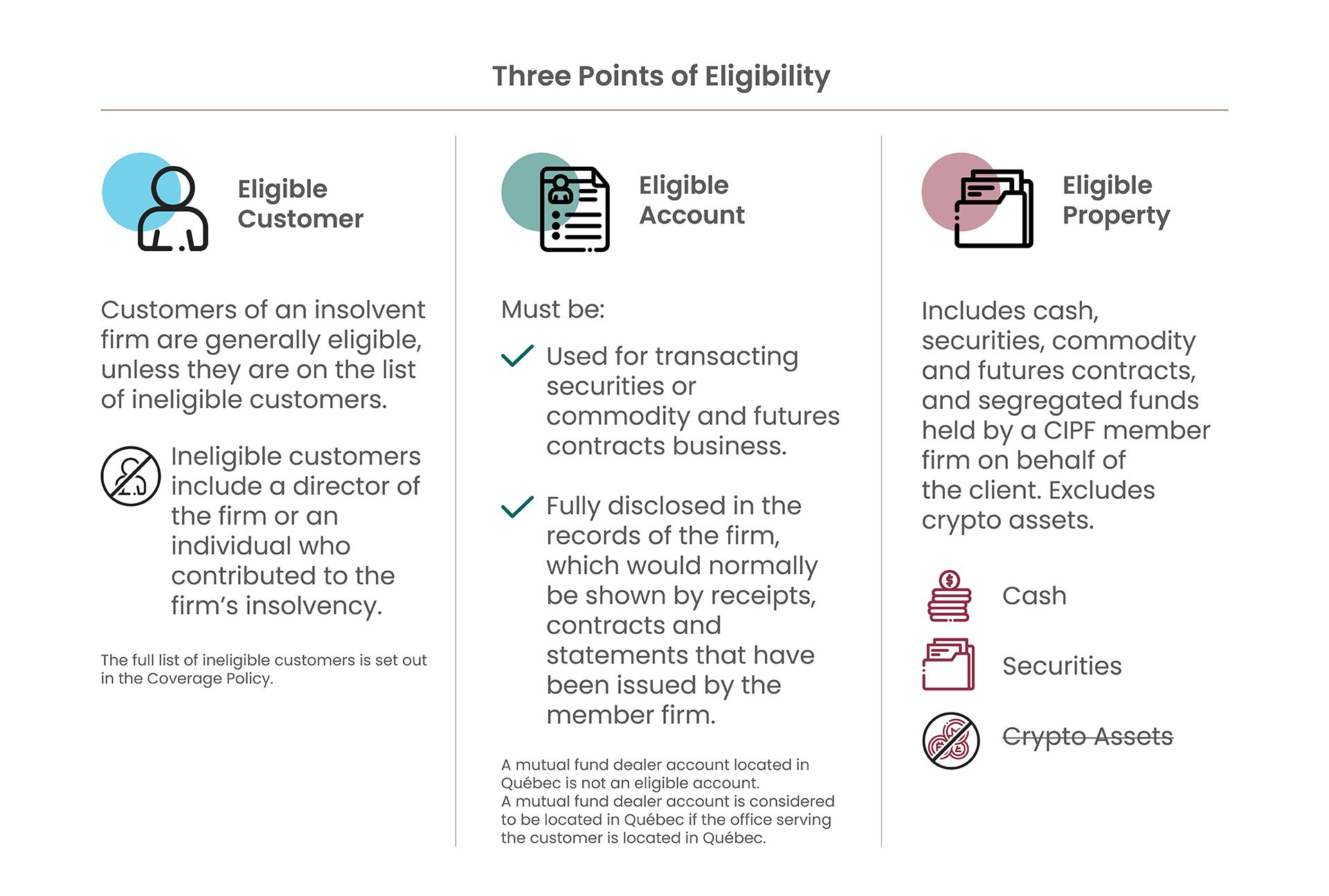
As explained in #1 above, when a member is bankrupt and the trustee is appointed, clients receive a proportionate share from the customer pool.
For clients that meet the three points of eligibility, CIPF would then provide a “top-up” to cover the shortfall, which is where the $1 million coverage limit would apply. Importantly, accounts larger than $1 million can be fully protected if the “shortfall” per account does not exceed $1 million. This is because CIPF coverage applies after the distribution to clients from the customer pool.

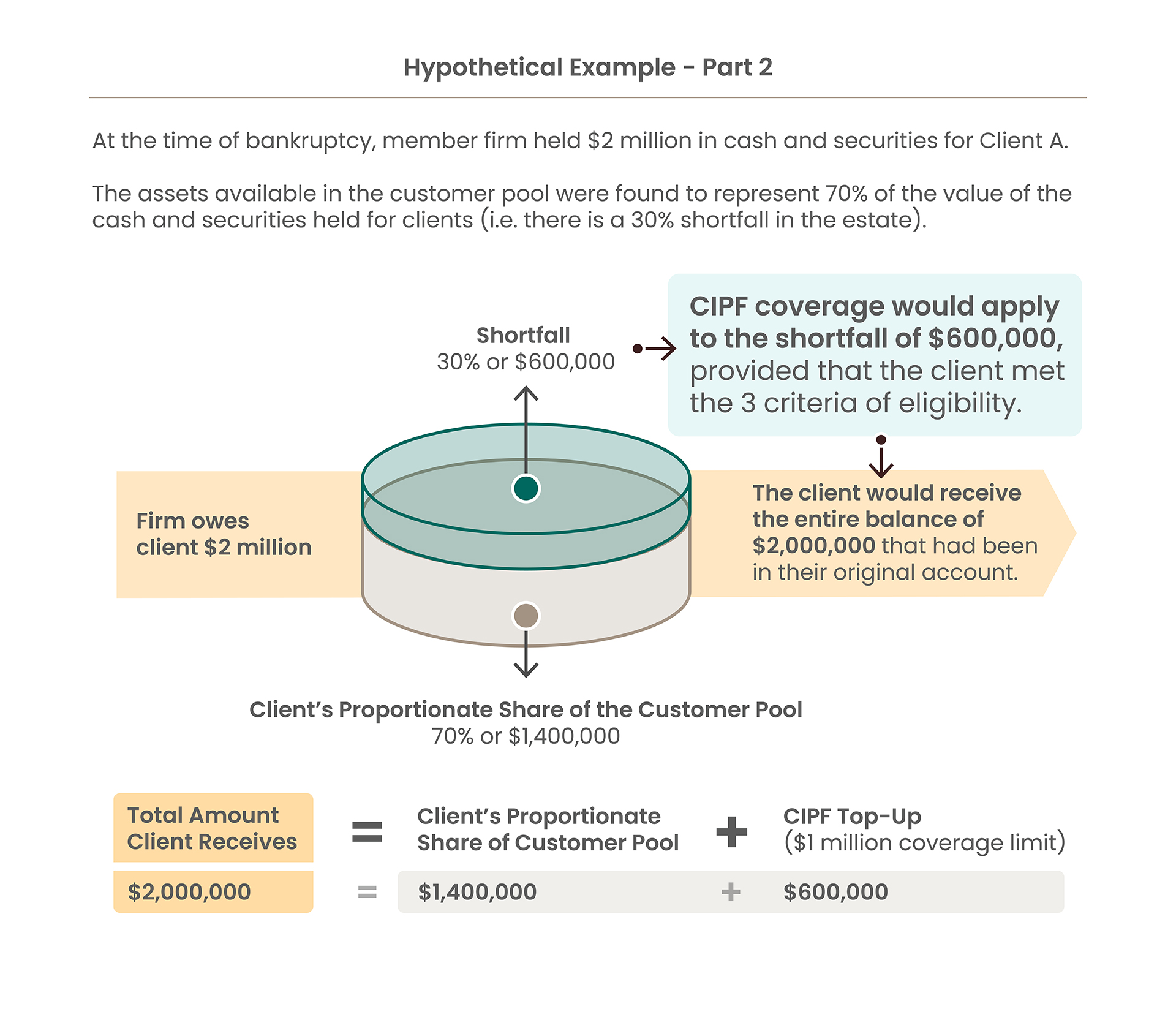
3. Segregation of Assets
Member firms are required to segregate clients’ fully paid securities from the firm's assets.
However, not all client property is required to be segregated. For example, investment dealers may use client cash in their operations. In addition, securities subject to lending arrangements (with the client’s consent) would not need to be segregated.
Note: The above is an illustration only. Please speak to your advisor and refer to the full text of the Coverage Policy and applicable laws when evaluating your own circumstances.
Have a Question? Just Ask!